

Table of Contents
- Start With Forage: What Your Horse Actually Gets From Hay
- Signs of Nutritional Deficiency in Horses
- How to Read Equine Supplement Labels
- How Human Grade Pet Vitamins Set the Quality Bar
- Matching Supplements to Your Horse's Life Stage and Workload
- Vitality Products Built for Joint, Gut, and Hoof Support
- Conclusion: A Practical Buying Checklist for Horse Vitality
- Frequently Asked Questions
Last Updated: September 16, 2026
Start With Forage: What Your Horse Actually Gets From Hay
Choosing supplements for horse vitality begins with understanding what forage already provides, because hay is the foundation of nearly every equine diet and it varies enormously in nutritional value. Forage should supply the bulk of a horse's daily nutrition, yet AAEP core vaccination and nutrition guidance the vitamin and mineral content of hay depends on soil conditions, plant maturity at harvest, and storage.
That's the gap supplements are meant to fill.
Signs of Nutritional Deficiency in Horses
Recognizing the signs of nutritional deficiency in horses starts with the coat, hooves, and energy level, since these are the tissues that show dietary gaps first. But symptoms alone are unreliable, the same dull coat can come from a copper shortfall, a zinc shortfall, a parasite load, or a low-fat diet. The useful move is to pair what you see with what you can measure.
Common indicators owners report to veterinarians include:
- Rough or fading coat condition despite good grooming
- Slow hoof growth with frequent chips and cracks
- Reduced stamina during routine work
- Poor appetite or picky eating at feed time
- Digestive upset during training or travel
- Loss of topline or muscle tone without a change in workload
What Each Sign Usually Points To
Visible Sign |
Likely Nutrient Gap |
Mechanism |
|---|---|---|
Dull, faded coat |
Copper, zinc, omega-3s |
Copper and zinc drive keratin and melanin synthesis; omega-3s modulate skin inflammation |
Brittle, slow-growing hooves |
Biotin, methionine, zinc, copper |
Biotin and methionine feed keratin cross-linking; zinc and copper are cofactors in hoof wall formation |
Poor stamina |
Vitamin E, selenium, iron |
Vitamin E and selenium protect muscle from oxidative damage; iron carries oxygen |
Loss of topline |
Lysine, protein quality |
Lysine is the first limiting amino acid in most forage-based diets |
Muddy, unthrifty appearance |
Generalized trace mineral imbalance |
Trace minerals work in ratios, not isolation |
Why Single-Symptom Fixes Fail
A common mistake is treating one symptom in isolation. Brittle hooves might reflect a biotin or methionine shortfall, but they can also signal a broader mineral imbalance, and adding biotin alone will not correct a copper deficiency. The same logic applies to coat condition: pouring in omega-3s without addressing zinc will not produce a shine.
The Diagnostic Order That Actually Works
Most practitioners recommend working through this sequence before buying anything:
- Forage analysis. Send a hay sample to a lab for mineral and protein profiling. This is the only way to know what your horse is already getting.
- Body condition and workload review. A horse in light work has different requirements than one in training five days a week.
- Bloodwork when symptoms are persistent. Selenium, vitamin E, and iron status can be checked directly; many others cannot, which is why forage data matters more.
- Veterinary consultation before stacking products. A veterinarian can flag interactions and contraindications that a label will not.
The Over-Supplementation Trap
Deficiency gets all the attention, but excess causes real harm. Selenium, copper, iron, and vitamin A are all toxic above threshold, and the risk compounds when owners feed a ration balancer, a joint supplement, and a hoof supplement that each contain overlapping minerals. Before adding any product, total the daily intake of every nutrient across every feed and supplement your horse receives.
How to Read Equine Supplement Labels
Learning how to read equine supplement labels protects you from paying for fillers and underdosed ingredients. The guaranteed analysis panel lists minimum or maximum amounts of each nutrient, and the ingredient list tells you the form used, which affects bioavailability.
Here's what to check, in order:
Label Element |
What to Look For |
Why It Matters |
|---|---|---|
Guaranteed analysis |
Specific amounts per serving |
Confirms actual dosage, not just presence |
Ingredient form |
Chelated vs. non-chelated minerals |
Chelated forms are more absorbable |
Serving size |
Grams per scoop or pellet count |
Prevents underfeeding |
Other ingredients |
Fillers, binders, flavoring |
Affects palatability and potency |
Expiration date |
Clear, current date |
Degraded nutrients lose value |
How Human Grade Pet Vitamins Set the Quality Bar
The best human grade pet vitamins raise the standard for ingredient sourcing, testing, and potency, and that standard now extends to equine products. Human-grade manufacturing means ingredients meet the same purity and contamination thresholds applied to products made for people, including screening for heavy metals and fillers.
Matching Supplements to Your Horse's Life Stage and Workload
Age and workload change nutritional requirements, so supplementation strategy should shift as a horse moves from training to retirement. Most guides stop at that sentence. The useful version names the specific nutrients that matter at each stage, the reason they matter, and the interactions that make stacking products risky.
Foals and Growing Horses (Birth to 3 Years)
The priority is skeletal development, and the two nutrients that most often go wrong are copper and zinc. Growing horses need copper and zinc in a ratio that supports cartilage and bone formation; an inverted ratio, too much zinc relative to copper, can interfere with copper absorption and contribute to developmental orthopedic issues. Calcium and phosphorus also need to be balanced, ideally near 2:1, and forage alone rarely delivers that in a growing horse's diet.
Performance Horses in Work
Heavy work increases sweat loss, oxidative stress, and joint load. The nutrients that matter most are:
Nutramax Cosequin ASU Balance Joint →
- Electrolytes, sodium, chloride, potassium, and magnesium lost in sweat. Plain salt is not enough for a horse in hard work; a balanced electrolyte replaces what sweat actually removes.
- Vitamin E and selenium, antioxidant defense for muscle under repeated exertion.
- Joint support, glucosamine, chondroitin, MSM, and hyaluronic acid, ideally started before lameness appears rather than after.
- B-vitamins, thiamine and riboflavin support energy metabolism in hard-working horses.
Senior Horses (15+ Years)
Senior horses face three converging problems: reduced digestive efficiency, lower appetite, and accumulated joint wear. The practical implications:
- Easier-to-absorb nutrient forms. Chelated (protein-bound) minerals are better absorbed by a compromised gut than inorganic oxides or sulfates.
- Digestive support. Prebiotics, postbiotics, and yeast cultures help maintain hindgut fermentation when fiber digestion declines.
- Joint and mobility support. The same ingredients as performance horses, but often at higher inclusion rates because the horse has more cumulative wear.
- Vitamin C. Unlike most animals, horses synthesize their own vitamin C, but older horses may produce less; some practitioners add it for antioxidant support.
Idle and Pasture Horses
A horse on good pasture with light or no work often needs only a ration balancer or a vitamin-mineral supplement, not a joint, gut, and hoof stack. Over-supplementing a lightly worked horse is one of the most common and most wasteful patterns in equine feeding.

The Interaction Problem Most Guides Skip
Supplements are not additive in a straight line. Several combinations create real risk:
- Selenium stacking. Selenium toxicity causes hoof loss, lameness, and neurological damage. If two products list selenium, total the daily milligrams against your horse's requirement before feeding both.
- Calcium and phosphorus imbalance. Adding a calcium-heavy supplement on top of a forage that is already high in calcium can invert the ratio and impair bone mineralization.
- Iron and copper competition. Excess iron interferes with copper and zinc absorption. Many equine diets are already iron-heavy; adding more is rarely helpful.
- Vitamin A and D toxicity. Both are fat-soluble and accumulate. Do not stack multiple products containing them.
- NSAID and joint supplement overlap. Horses on long-term NSAIDs for arthritis should have any joint supplement reviewed by a veterinarian, since some ingredients can compound gastrointestinal risk.
A Simple Decision Rule
Match the supplement to the stage, not to the marketing. A growing horse needs mineral balance. A performance horse needs electrolytes, antioxidants, and joint support. A senior needs absorbable nutrients, gut support, and joint care. An idle horse needs a baseline vitamin-mineral product and nothing more. When in doubt, add one product at a time, give it eight to twelve weeks, and evaluate against a specific outcome, coat, hoof growth, stride length, or attitude under work.
Vitality Products Built for Joint, Gut, and Hoof Support
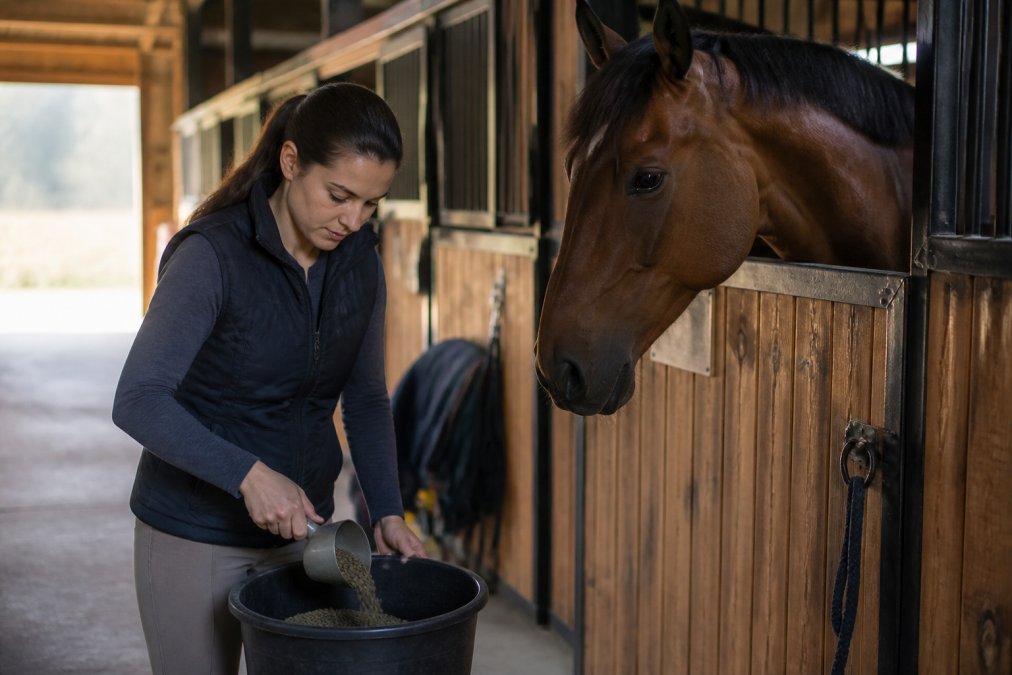
Products built for joint, gut, and hoof support address the three systems that most often show wear in aging or working horses, and pairing them correctly matters more than buying the most expensive option. Storage also affects potency: heat, sunlight, and moisture degrade vitamins and probiotics, so keep pellets sealed in a cool, dry place and respect expiration dates.
Conclusion: A Practical Buying Checklist for Horse Vitality
Choosing supplements for horse vitality comes down to matching measured needs to verified ingredients, not collecting the most bottles. Start with forage analysis, read labels for actual dosages, and match formulas to your horse's age and workload.
Before you buy, run through this checklist:
- Do you know your hay's mineral profile?
- Does the label state amounts per serving, not a blend?
- Are minerals in chelated form for better absorption?
- Does the formula fit your horse's life stage and work level?
- Are you avoiding duplicate ingredients across products?
- Is storage keeping potency intact?
Frequently Asked Questions
What horse supplements should not be mixed?
Some ingredients compete for absorption or duplicate each other, so stacking multiple joint, mineral, or herbal products can push certain nutrients past safe levels. Calcium and phosphorus ratios matter, and mixing several calming or anti-inflammatory herbs can compound effects. Before combining products, review every label for overlapping ingredients and ask your veterinarian whether the total daily intake stays within safe limits. A single comprehensive formula often beats three overlapping ones, especially for horse vitality support.
What are the essential nutrients for maintaining horse vitality?
Forage covers most calorie and protein needs, but horses on hay-only diets often fall short on vitamin E, selenium, zinc, copper, omega-3 fatty acids, and salt. These nutrients support immune function, joint mobility, hoof integrity, and skin and coat condition. A ration balancer or targeted supplement fills the gaps. Your veterinarian can review a hay analysis alongside your horse's workload and age to decide which nutrients actually need supplementing for horse vitality.
How can I tell if my horse needs a vitality supplement?
Watch for dull coat, brittle or slow-growing hooves, reduced stamina, stiffness after work, and changes in appetite or manure consistency. These signs of nutritional deficiency in horses often point to gaps in a forage-based diet rather than disease. Have your veterinarian rule out medical causes first, then use a hay analysis to identify missing nutrients. Only supplement what the diet lacks, rather than adding products on guesswork.
What should I look for on a supplement label to ensure quality?
Look for a guaranteed analysis with specific amounts per serving, not vague proprietary blends. Check for a manufacturer name and contact information, a lot number, and an expiration date. Chelated trace minerals such as zinc and copper are more bioavailable than oxide forms. Third-party testing or adherence to FDA feed regulations signals accountability. Learning how to read equine supplement labels helps you compare products on facts rather than marketing claims.
Are there risks in mixing different horse supplements?
Yes. Overlapping ingredients can lead to excessive intake of fat-soluble vitamins, selenium, or certain herbs, and some compounds interfere with absorption of others. Mixing multiple joint products, for example, may double glucosamine and MSM doses without added benefit. Keep a written list of everything your horse receives, including feed and treats, and review it with your veterinarian before adding anything new to avoid interactions or toxicity.
How do human-grade standards apply to equine supplements?
Human-grade means ingredients meet the same purity and testing standards applied to products for people, including limits on heavy metals and contaminants. For horses, this matters because cheap fillers and unverified mineral sources can reduce how well a supplement works. Choosing products with transparent sourcing and batch testing gives you more confidence that the label matches what is in the bucket, which supports consistent horse vitality over time.
0 comments