

Table of Contents
- Dasuquin vs. Zesty Paws: A 2026 Joint Supplement Comparison
- How I Evaluated These Two Brands
- What to Look For in a Joint Supplement
- Where Each Product Wins: Use-Case Recommendations
- Frequently Asked Questions
Last Updated: September 14, 2026
Dasuquin vs. Zesty Paws: A 2026 Joint Supplement Comparison
Dasuquin versus Zesty Paws is the comparison dog owners search for once the vet mentions joint support and Google hands them a wall of options. Both brands sell glucosamine-chondroitin chews. The difference is in what’s on the label and what’s hidden behind a “proprietary blend.” At Paw and Pestle, I hand-pick every formula we carry, so I look at brands milligram by milligram, not by the marketing copy on the bag.

A dog owner comparing two joint supplement bags at a kitchen table, reading the ingredient panels side by side
Here is the quick verdict before the detail:
Factor |
Dasuquin (with MSM) |
Zesty Paws Mobility Bites |
|---|---|---|
Dose transparency |
Every active ingredient listed with an exact milligram amount |
Proprietary blend; total weight given, individual doses not disclosed |
Active ingredients |
Glucosamine, chondroitin, MSM, ASU, Boswellia, green tea extract |
Glucosamine, chondroitin, MSM, vitamin E |
Third-party testing disclosure |
Not published per batch |
Not published per batch |
Subscription flexibility |
One-time purchase or retailer-set terms |
Save up to 20%, skip/pause/cancel anytime |
Best for |
Dogs with diagnosed joint disease or advancing stiffness |
Healthy dogs on no other medication or supplement only; undisclosed dosing rules it out otherwise |
Neither brand publishes batch-level testing, and that gap matters more than which one has the flashier packaging. Below, I’ll show you how to read both labels and what to ask before you buy either one.
How I Evaluated These Two Brands
I scored both on four criteria I’d use in the exam room: ingredient form and dose, whether the dose is disclosed at all, testing disclosure, and how the company handles subscriptions. That’s a straight comparison of what’s actually printed on the label and posted on the plan pages, not a ranking by review count.
A joint supplement’s front label tells you almost nothing. The supplement facts panel does. Most buying guides rank joint chews by star rating instead of by what’s verifiable, which is backwards.
Oversight here is lighter than you’d expect. The FDA regulates joint supplements as food, not drugs, and does not review them for effectiveness before they hit shelves. That’s not a reason to skip them. It’s a reason to read the label like you’d read a chart.
What to Look For in a Joint Supplement
The best joint supplements for dogs disclose the exact dose of every active ingredient and match that dose to your dog’s weight, not a one-size-fits-all scoop. Skipping this check is how owners end up giving a 70-pound Lab the same glucosamine dose as a 15-pound terrier and wondering why nothing changed.
Start with these four checks:
- Exact dosing, not a blend total: “1,510 mg joint blend” tells you almost nothing. “600 mg glucosamine HCl” tells you everything.
- Chondroitin source and form: matters. Sodium chondroitin sulfate absorbs differently than lower-grade chondroitin sulfate. If the label won’t name the form, assume the cheaper one.
- No unnecessary fillers: brewers yeast, grain-based carriers, and artificial flavoring are common triggers for sensitive dogs.
- Batch testing: third-party testing for heavy metals, PCBs, and microbial contaminants should be available on request, not just promised on a marketing page.
A vet-formulated claim on the front of the bag tells you nothing about any of these four checks. The supplement facts panel on the back is where the real comparison happens, and that’s true whether you’re looking at Dasuquin, Zesty Paws, or anything else on the shelf.
Ingredient and Dosing Breakdown
Here’s how the two products actually compare, ingredient by ingredient, using Dasuquin’s small/medium dose and Zesty Paws’ full blend.
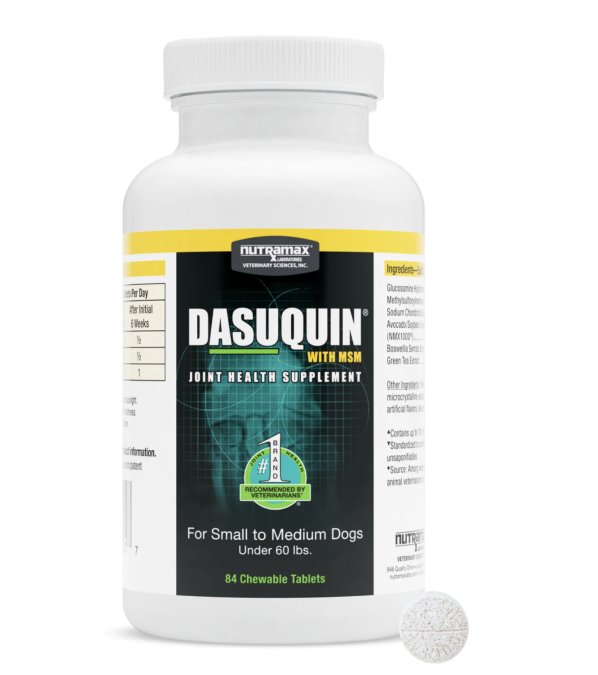
Read the “other ingredients” as carefully as the active blend. Carriers like brewers yeast, soy protein, and unnamed “natural flavor” appear in many joint chews and can trigger reactions in sensitive or food allergic dogs. If your dog is on a limited-ingredient diet, a long filler list undercuts the whole point, so check the full panel, not a marketing summary.
A brand’s exact-dose label doesn’t excuse a bad carrier. If your dog is sensitive to yeast, soy, or grain, check the full ingredient panel of whichever product wins on dosing before you buy it.
Where Each Product Wins: Use-Case Recommendations
Dasuquin is the only real option for a dog with a confirmed joint disease diagnosis, on other medication, or on any other supplement, because it’s the only one of the two that discloses exact milligram amounts. Zesty Paws’ simpler daily dose and subscription flexibility only matter for a healthy dog on nothing else, and even then, undisclosed dosing is a real tradeoff you’re accepting for convenience. This isn’t a close call. It’s a screening question, and it comes before subscription terms or flavor preference.
The honest limitation on both sides: without published batch testing, you are trusting the brand's word. That is true of most of the category, and why we ask for certificates of analysis before a formula reaches our shelf.
If your dog has a diagnosed condition, kidney issues, or is on medication, get veterinary guidance before adding anything. A curated retailer can point you to better-formulated options, but it cannot replace your vet's read on your dog's case.
Frequently Asked Questions
Is Dasuquin or Zesty Paws better for dogs with diagnosed joint disease?
Dasuquin is the fit for a diagnosed joint disease case, full stop, because it’s the only one of the two where you know exactly what your dog is getting. Zesty Paws’ proprietary blend discloses a total weight, not individual milligram amounts, which is disqualifying if your dog is on any other supplement or medication: you can’t screen for an interaction with an ingredient whose dose you don’t know. For a dog with a diagnosed condition or one on other medications, undisclosed dosing isn’t a minor tradeoff, it’s a reason to look elsewhere.
Does Dasuquin require a loading phase, and what happens if you skip it?
Yes. Dasuquin’s label directs a four-to-six-week loading dose before dropping to a maintenance amount, which signals the manufacturer expects a measurable response to build over that window. Skipping the loading phase and starting at the maintenance dose means you’re not giving the formula the same trial its own label describes, so you won’t get a fair read on whether it’s working for your dog.
Can I switch from Zesty Paws to Dasuquin, or combine the two?
Switching is generally straightforward since both use the same core actives, glucosamine and chondroitin, but talk to your vet before combining them or stacking either one with another joint supplement. Doubling up on overlapping ingredients doesn’t necessarily add benefit and can mean your dog is getting more of an active ingredient than intended. If you’re switching because a loading-phase protocol didn’t seem to help, ask your vet whether a diagnostic workup makes sense before trying a different formula.
Why does an undisclosed dose matter if my dog isn’t on other medication?
It still matters. An undisclosed dose isn’t just a dosing question, it’s a safety question, because you can’t screen for a drug interaction with an ingredient amount you don’t know. Glucosamine and chondroitin are generally well tolerated, but “generally well tolerated” assumes a known, reasonable dose, not an unknown one buried inside a blend. If your dog is ever prescribed a new medication or you add another supplement, you need to be able to hand your vet a full ingredient and dose list, and a proprietary blend can’t give you that. That’s why we treat undisclosed dosing as a hard no-go rather than a downside to weigh against convenience. Dasuquin and Zesty Paws aren’t an even split. If your dog has a diagnosed joint condition or takes any other medication or supplement, undisclosed dosing rules Zesty Paws out, not just down a notch. At Paw and Pestle I only carry formulas with fully disclosed dosing — Nutramax Cosequin, Dasuquin with MSM, MovoFlex Advanced, and PetThrive with Resveratrol — and free shipping over $75 makes it easy to add one to an order without paying shipping to try it. Give your dog joint support you can actually verify.
0 comments