

Table of Contents
- Why Pet Parents Look for Supplement Alternatives
- Vet-Recommended Dog Supplements: What Sets Them Apart
- How to Choose Safe Dog Supplements
- Comparing Soft Chews, Capsules, and Powders
- Allergy-Friendly and Life-Stage Specific Options
- Paw and Pestle Picks for Dog Wellness
- Safety and Quality Standards to Look For
- When to Consult a Veterinarian
- Building a Supplement Routine That Sticks
- Frequently Asked Questions
Last Updated: September 22, 2026
Why Pet Parents Look for Supplement Alternatives
Most pet parents search for supplement alternatives because a dog's mobility changed, digestion became unpredictable, or a senior pet needs more support. This guide covers what separates a good dog wellness supplement from marketing.
Vet-Recommended Dog Supplements: What Sets Them Apart
Vet-recommended dog supplements are products a veterinarian would put their name behind: a stated purpose, ingredients at meaningful amounts, and a manufacturer who can answer questions about sourcing and testing.
- Named active ingredients with amounts. "Proprietary blend" with no quantities is a red flag.
- A delivery format the pet will actually take. A perfect formula a dog refuses is worth nothing.
- A stated use case. Joint support, digestive support, and calming support are different jobs.
How to Choose Safe Dog Supplements
Start with the pet, not the product. Age, weight, medications, and diagnoses should narrow your list before you read a label.
- Identify the goal. Mobility, digestion, calm, immune support, or general wellness maintenance. Pick one.
- Check the life stage. Dosage is usually weight-based, so weigh your pet.
- Cross-reference ingredients. Search each active ingredient individually; a token amount of the headline ingredient is your answer.
- Look for third-party testing or a stated quality standard. Batch documentation separates a real manufacturer from a repackager.
- Confirm the format fits your pet. Soft chews, capsules, powders, and liquids trade off palatability and bioavailability.
- Start one product at a time. Adding three at once teaches you nothing about which helped.
- Recheck with your vet. Especially for pets on medication or managing a chronic condition.
Signs of Poor Quality Pet Vitamins
Watch for vague ingredient lists, missing amounts, artificial colors and preservatives masking an unpleasant base, and unsupported claims. If a company won't say where its ingredients come from, that silence is the information.
When to Start Dog Wellness Supplements
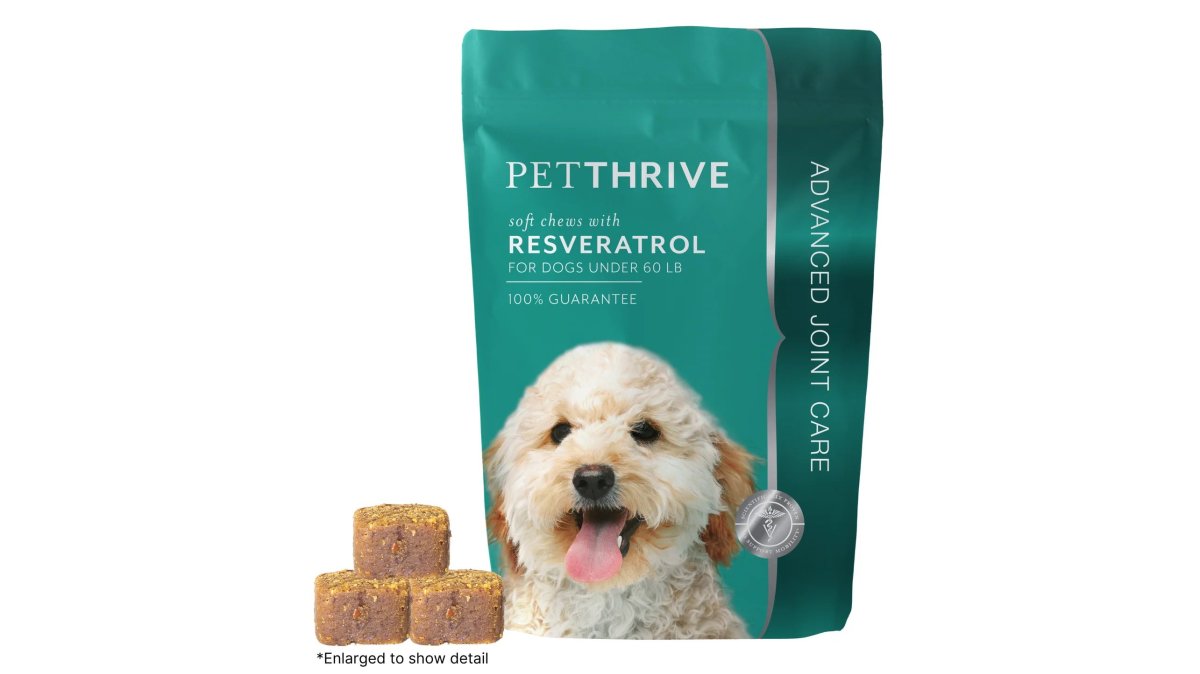
Petthrive Resveratrol Joint Soft Chews for Dogs
Comparing Soft Chews, Capsules, and Powders
Format decides whether a supplement actually gets into your pet. Soft chews win on palatability, capsules allow precise dosing without flavoring, and powders let you hide nutrition in food and split doses across meals.
Format |
Best For |
Main Trade-Off |
Dosing Precision |
|---|---|---|---|
Soft chews |
Picky dogs, daily joint support |
Contains flavoring and binders |
Weight-based, moderate |
Capsules |
Allergies, precise dosing, cats |
Requires pill administration |
High |
Chewable tablets |
Immune and antioxidant support |
Some pets chew poorly |
High |
Powders / meal mixers |
Picky eaters, multi-nutrient support |
Requires measuring and mixing |
Moderate |
Allergy-Friendly and Life-Stage Specific Options
Allergy-friendly alternatives matter more than most owners realize. Common soft-chew binders include brewer's yeast, pork liver powder, and various proteins; if your dog has a suspected protein allergy, a chew built on that protein is a poor choice no matter how good the actives are.
Paw and Pestle Picks for Dog Wellness
When pet parents ask me for a supplement alternative, my answer is usually Nutramax. Their quality and safety standards are excellent, their flagship formulas have been studied in dogs, and several of their products are sold only through veterinary channels. Here's how the Nutramax products we carry map onto the goals above.
- Joints and mobility: Dasuquin with MSM Soft Chews for ongoing support, or Cosequin DS as a starting point or Petthrive Resveratrol Joint Soft Chews, which add resveratrol for a healthy inflammatory response.
- Digestion: Proviable 5-in-1 Fiber, a prebiotic fiber powder that mixes into food, paired with Proviable-DC probiotic capsules.
- Skin and coat: Welactin Omega-3 Soft Chews, with Dermaquin for dogs who need more skin barrier support.
- Calm: Solliquin Soft Chews for dogs who get stressed by storms, travel, or visitors.
Safety and Quality Standards to Look For
Quality standards aren't a marketing category but a set of answerable questions: Who makes this? Where do the ingredients come from? Is there batch testing? Does the label match the contents?
Nutramax Proviable 5-in-1 Fiber for Dogs & Cats →
When to Consult a Veterinarian
Some situations need a professional before you buy anything. Talk to your vet first if your pet is on prescription medication, has a diagnosed organ condition, is pregnant or nursing, is scheduled for surgery, or has kidney disease. Cats deserve extra caution, since they metabolize many compounds differently than dogs.
Building a Supplement Routine That Sticks
Consistency beats intensity: a modest daily dose for three months tells you far more than a large sporadic dose for two weeks. Pick a fixed time, tie it to a meal, and split the daily amount morning and evening where the label allows.
Frequently Asked Questions
Are popular dog vitamin brands good for dogs?
Quality varies widely across popular dog supplement brands. Check the label for active ingredients, dosage guidelines, and a guaranteed analysis. Look for third-party testing or clinical testing claims. If a product lists vague ingredients or has no dosage guidelines, it is a sign of poor quality pet vitamins. Always consult your veterinarian before starting any supplement. If you want a vet-channel alternative, Nutramax is the brand I reach for most often.
What should I look for when choosing dog wellness supplements?
Start with the active ingredients and their bioavailability. Look for a clear dosage chart based on your dog's weight, a guaranteed analysis, and a manufacturer that follows quality standards. Avoid products with artificial fillers or vague proprietary blends. A vet-recommended dog supplement will list specific amounts per ingredient and provide a way to contact the maker with questions.
How do I know if my dog needs a wellness supplement?
Signs include stiffness after rest, dull coat, occasional digestive upset, or low energy. Senior dog care often benefits from joint support or immune support. If your dog is on a complete diet and still shows these signs, a supplement may help. Ask your veterinarian to rule out underlying conditions first, then choose a formula that matches your dog's life stage and needs.
Are there vet-formulated alternatives to mass-market dog supplements?
Yes. Some retailers curate products hand-picked by a veterinarian. For example, Paw and Pestle offers dog wellness supplements selected by Dr. Elena Shockman, VMD. Many of them come from Nutramax, including Dasuquin for joints, Proviable for digestion, and Welactin for skin and coat. A vet-formulated or vet-curated approach can help you avoid poor quality products and find options that fit your dog's specific health needs.
What are the signs of a high-quality pet supplement?
High-quality supplements list exact amounts of active ingredients, provide dosage guidelines by weight, and include a guaranteed analysis. They may mention clinical testing or quality standards. The label should have a lot number and an expiration date. If a product makes vague claims without specifics, or if the price seems too low for the ingredients listed, treat it with caution.
0 comments