

Table of Contents
- Vetted Supplements for Dog Skin Health
- Simple Daily Habits That Support Healthy Skin
- Signs of Dog Skin Allergies and When to See Your Vet
- Frequently Asked Questions
Last Updated: September 16, 2026
Vetted Supplements for Dog Skin Health
It's 2 a.m., and your dog is licking its paws again. Healthy skin comes down to two things: what goes in through nutrition and supplements, and what the skin touches every day. Here are the vetted supplements for dog skin health, plus daily habits that cost nothing.
1. Omega-3 Fatty Acids (EPA and DHA)
EPA and DHA, from fish or algae oil, feed the skin's lipid barrier and calm the inflammation behind itching. Look for a named source and stated EPA/DHA content, not just "fish oil," and match the dose to your dog's weight. Caution: skip fish-based oils for dogs with a fish allergy, and check with your vet before surgery since high doses can affect clotting.
2. Probiotics (the Gut-Skin Connection)
Much of the immune system sits in the gut, which is why probiotics appear in so many best supplements for dog itchy skin lists. Look for specific strains, a guaranteed CFU count, and a clear expiration date. Caution: introduce probiotics slowly, and don't give them within a couple of hours of an antibiotic.
3. Vitamin E
Vitamin E is a fat-soluble antioxidant that protects skin cells from oxidative stress and supports the moisture barrier. Look for natural-source vitamin E (d-alpha-tocopherol), not the synthetic form. Caution: it accumulates, so don't stack multiple supplements containing it without adding up the total.
4. Zinc
Zinc supports skin repair and the immune response; a deficiency can show up as dull coat, scaling, or slow wound healing. Look for a chelated form such as zinc methionine, which absorbs better. Caution: zinc is toxic in excess. Never combine several zinc-containing products, and keep human zinc tablets out of reach.
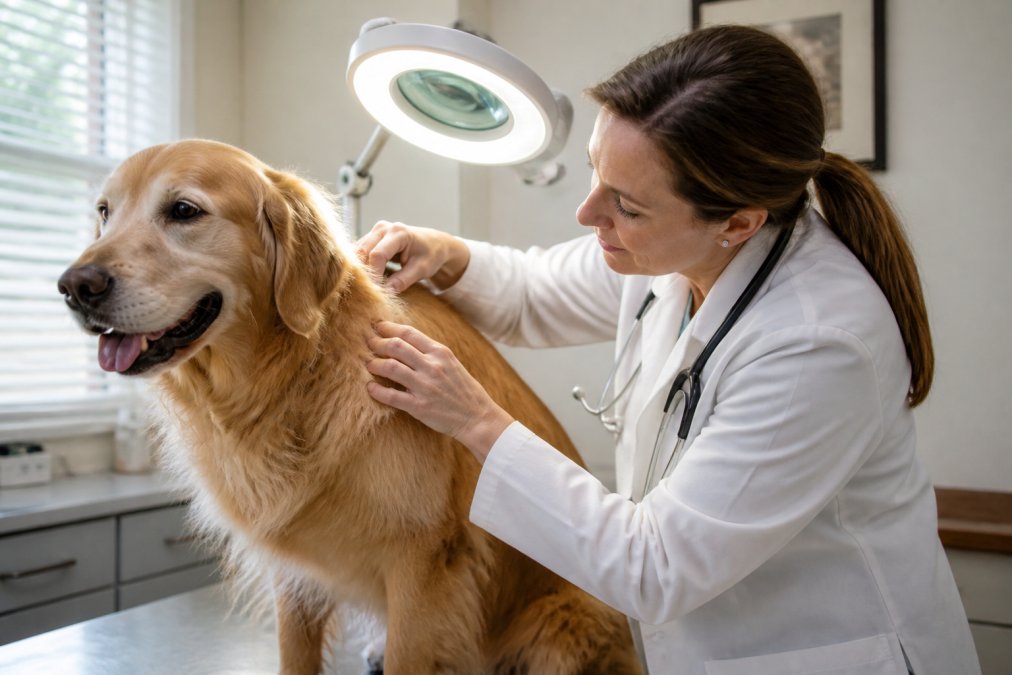
Simple Daily Habits That Support Healthy Skin
Supplements do half the work. The other half is what your dog's skin meets every day, and that's where a consistent dog skin care routine pays off.
1. Wipe Paws After Walks
Wiping dog paws after walks, or at least before bed, removes pollen, grass, and outdoor allergens before your dog licks them off or tracks them into bed. Use a damp cloth or pet-safe wipe on each paw, including between the pads.
2. Dry Paws, Skin Folds, and Ears Fully
Moisture left in skin folds or ear canals creates the warm, damp environment where yeast and bacteria thrive. After baths, swimming, or rain, dry every fold, the spaces between the toes, and the ear openings.
Dermaquin Skin & Coat Support →
3. Wash Bedding Weekly in Hot Water
Your dog's bed collects dander, dust mites, and pollen. Wash bedding weekly in hot water and dry thoroughly; if your dog sleeps on your bed, add your sheets to the rotation.
4. Brush Regularly
Brushing spreads natural oils across the coat, removes loose fur, and lets you spot hot spots, flakes, or lumps early. Short-haired dogs need a weekly pass with a rubber curry; longer coats may need brushing several times a week.
Signs of Dog Skin Allergies and When to See Your Vet
Supplements and habits have limits. Call your vet for open sores or hot spots that won't heal, patchy hair loss, recurring ear infections, a persistent strong odor, or constant chewing that disrupts sleep. If your dog is on prescription allergy medication, ask before adding any supplement, since some ingredients can interact.
When itching keeps coming back, guessing at products gets frustrating. Paw and Pestle was founded by veterinarian Dr. Elena Shockman, and every product is hand-picked by a vet, from skin support soft chews to omega-3 skin and coat formulas. If you're unsure what fits your dog's weight, breed, or medications, a supplement consultation with Dr. Shockman takes the guesswork out of it. Get started with Paw and Pestle and build a skin care routine backed by veterinary expertise, with free shipping on orders over $75.
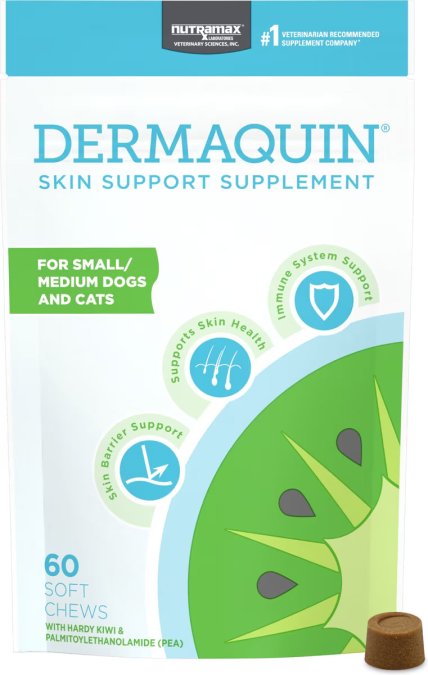
Nutramax Dermaquin Skin & Coat Soft Chews for Dogs & Cats, 60 ct
Disclosure: Paw & Pestle is owned by Dr. Elena Shockman, VMD. When you buy through our shop at pawandpestle.com, the company earns revenue and participating veterinary practices may also earn a margin. The same or comparable products are available from other retailers, and you’re free to buy elsewhere. Our evaluation standards do not change based on compensation.
Frequently Asked Questions
What are the best supplements for dogs with skin issues?
Omega-3 fatty acids from fish oil, probiotics, vitamin E, and zinc are the most studied options for dog skin health. Omega-3s, especially EPA and DHA, help calm inflammation and support the skin barrier. Probiotics address the gut-skin connection. Look for products with clear dosing by weight and third-party testing. A vet-formulated chew like Nutramax Dermaquin combines omega fatty acids with hardy kiwi to support a healthy skin response to everyday allergens.
How long does it take for skin supplements to work on dogs?
Most vets suggest giving any skin supplement at least 4 to 8 weeks before judging results. The skin barrier renews slowly, so improvements in itching, dandruff, and coat luster build gradually. Nutramax Dermaquin soft chews, for example, are dosed with an initial 2 to 4 week period before maintenance. If you see no change after two months of consistent use, ask your vet whether the ingredient, dose, or diagnosis needs revisiting.
Can diet and supplements alone fix a dog's itchy skin?
Sometimes, but not always. If itching comes from dry skin or a mild nutritional gap, omega-3 for dogs skin plus a good diet can help noticeably. If the cause is an allergy, infection, or thyroid issue, supplements support but do not replace treatment. Daily habits like wiping dog paws after walks reduce allergen exposure, but persistent scratching, hair loss, or odor needs a vet exam rather than more supplements.
0 comments