

By Dr. Elena Shockman, VMD | Emergency & Critical Care Veterinarian | Founder of Paw & Pestle
Your senior dog used to sleep peacefully through the night. Now they're pacing the hallways at 2 a.m., panting, whining, staring at walls, or wandering around the house like they've forgotten where they're going.
And you're wondering: Can dogs get sundowners? Is this dog dementia? And what on earth can I give my dog to help them settle?
As an emergency veterinarian, I want you to know two things. Yes, dogs can develop dementia-like cognitive changes that disrupt their sleep. But not every senior dog who paces at night has dementia.
There are several medical conditions we need to rule out first.
And once we understand what's happening, there are ways we can help.
Quick Answer: What Can I Give My Dog for Sundowners?
Dogs can develop canine cognitive dysfunction syndrome (CCDS), sometimes called dog dementia. One common symptom is a disrupted sleep-wake cycle, with increased restlessness, confusion, and pacing at night.
Managing sundowning may involve:
- A veterinary examination to identify pain or other medical problems
- A consistent daily and nighttime routine
- Gentle daytime exercise and enrichment
- Nonslip flooring, nightlights, and stair gates
- Prescription medications or therapeutic diets when appropriate
- Calming supplements, such as Zylkene, for selected dogs experiencing anxiety
- Monitoring sleep, pacing, and changes in behavior
Important: Zylkene may support calmer behavior in some dogs, but it has not been proven to treat canine dementia or reverse sundowning.
1. Can Dogs Really Get Sundowners or Dementia?
Yes. Dogs can develop a progressive, age-associated condition called canine cognitive dysfunction syndrome.
It's sometimes compared to Alzheimer's disease in people because it can affect memory, learning, behavior, and awareness.
One of the most recognizable signs is a change in the sleep-wake cycle.
Your dog may sleep much of the day but become restless, confused, or anxious in the evening.
Veterinarians use the acronym DISHAA to recognize common symptoms:
- D — Disorientation: Getting lost in familiar rooms, staring at walls, or becoming stuck in corners
- I — Interactions: Changes in how your dog responds to family members or other animals
- S — Sleep: Sleeping more during the day and becoming restless overnight
- H — House-soiling: New accidents in a previously housetrained dog
- A — Activity: Repetitive pacing, wandering, or changes in normal activity
- A — Anxiety: Increased nervousness, clinginess, or difficulty settling
These signs deserve a veterinary assessment rather than being dismissed as normal aging.
2. Why Does My Senior Dog Pace All Night and Sleep All Day?
If you've ever had a baby who got their days and nights mixed up, you have a pretty good idea of what can happen to senior dogs with cognitive dysfunction.
Their internal sleep-wake cycle can become disrupted.
Instead of sleeping peacefully at night, they may wander around the house, pace, pant, vocalize, or seem completely unable to settle.
And then what happens?
They're exhausted the next day. So they sleep more during daylight hours, while nighttime continues to be difficult.
Meanwhile, you're exhausted, too.
And here's something that worries me even more as an emergency veterinarian: the risk of injury.
Think about an older dog who's already struggling with arthritis, muscle weakness, or poor coordination.
Now imagine that dog wandering around the house at 2 a.m., confused and exhausted.
Hardwood floors suddenly become an ice-skating rink. Stairs become dangerous. And a dog who was already a little wobbly can end up looking like Bambi trying to walk on ice.
A fall in a senior dog can be devastating, especially if they already have mobility problems.
So our goals extend well beyond simply getting a dog to sleep.
We're trying to reduce distress, improve rest, support mobility, and make nighttime safer for everyone.
3. Rule Out Pain and Other Medical Problems First
Before assuming your senior dog has dementia, please have your veterinarian evaluate them.
I've spent enough years in emergency medicine to know that changes in behavior can be an important clue that something else is wrong.
An older dog who paces at night might be experiencing:
- Arthritis or another painful condition
- Vision or hearing loss
- Urinary urgency or infection
- Gastrointestinal discomfort
- Endocrine or metabolic disease
- Neurologic disease
- Anxiety
- Canine cognitive dysfunction
Sometimes several problems are happening at once.
For example, a dog with cognitive dysfunction may also have painful arthritis. Even if we address their anxiety, they may continue pacing because they simply cannot get comfortable lying down.
My veterinary advice: Treat the dog in front of you, not just the symptom.
Sudden severe confusion, collapse, seizures, breathing difficulty, or marked distress should be evaluated urgently.
4. Help Your Senior Dog Get Their Days and Nights Back on Track
Consistency is incredibly valuable for older dogs, particularly those experiencing cognitive changes.
Try creating a predictable daily schedule with regular mealtimes, outdoor breaks, gentle activity, and bedtime.
During daylight hours, encourage appropriate activity rather than letting your dog spend the entire day sleeping without interruption.
That doesn't mean forcing an arthritic 14-year-old Labrador on a five-mile hike.
A short sniffing walk, gentle enrichment activity, or time outside in natural daylight may be much more appropriate.
In the evening, gradually transition toward a quieter environment.
Offer a final bathroom break, make sure your dog has a comfortable place to sleep, and keep familiar objects in familiar locations.
Remember that dogs with cognitive dysfunction may have difficulty adapting to sudden changes.
The goal is to make their world as predictable and comfortable as possible.
And please keep fresh drinking water available. Restricting water to prevent nighttime urination can create additional medical problems.
5. Prevent Slips, Falls, and Nighttime Injuries
This is one of the most overlooked parts of managing sundowning in senior dogs.
When a confused dog is pacing at night, they're not necessarily paying attention to their surroundings.
Combine that with arthritis, weakness, or declining vision, and you have a recipe for a potentially serious fall.
Here's what I recommend:
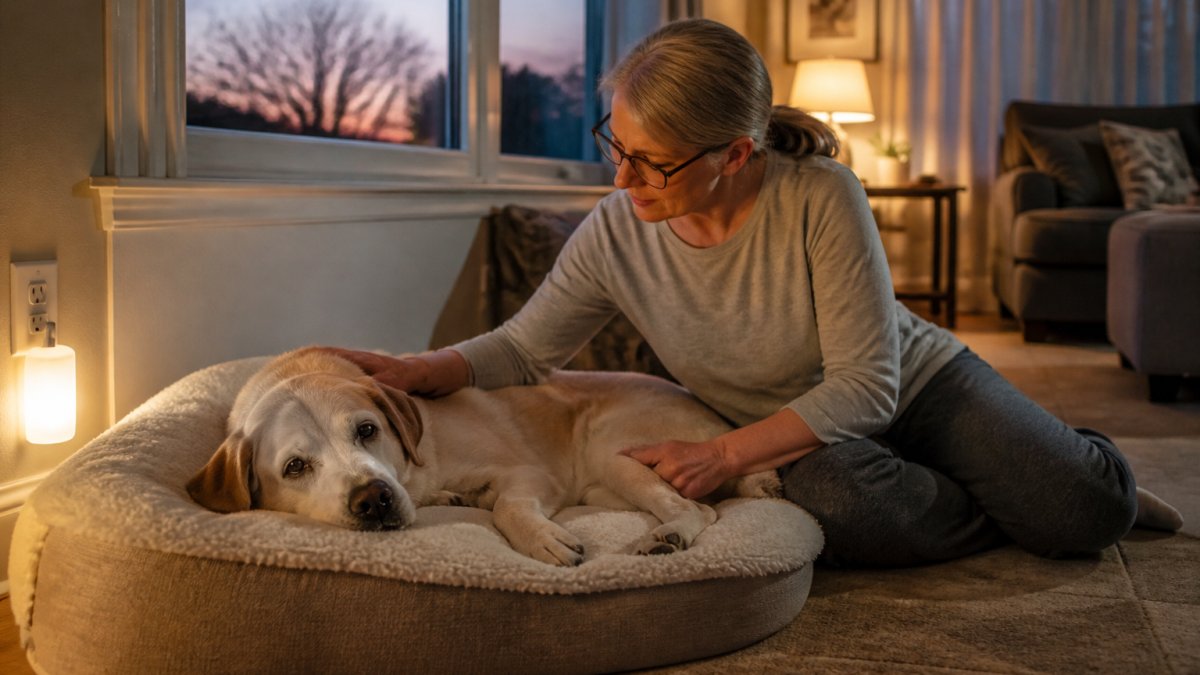
Add traction to slippery floors. Place rubber-backed runners or nonslip mats along frequently traveled routes, especially between the bed, water bowl, and door.
Block access to stairs. Use secure gates to prevent unsupervised wandering onto staircases.
Use gentle nightlights. Help your dog navigate familiar areas without being startled or disoriented by complete darkness.
Keep furniture arrangements consistent. A senior dog with declining vision or cognitive function may rely heavily on familiar pathways.
Provide comfortable, supportive bedding. An orthopedic bed may help dogs with joint discomfort rest more comfortably.
And one more thing: avoid giving sedating medications or supplements without veterinary guidance.
An already unsteady dog who becomes excessively sedated may be at even greater risk of falling.
6. What Can I Give My Senior Dog for Sundowners? Let's Talk About Zylkene
One of the questions I hear from pet parents is:
Is there something natural I can give my senior dog to help them relax at night?
One option worth discussing with your veterinarian is Zylkene, a calming supplement containing alpha-casozepine.

What Is Alpha-Casozepine?
You know how puppies and kittens get that adorable, sleepy, completely content look after nursing?
I call it being milk drunk.
Well, there's some interesting science behind milk proteins and relaxation.
Alpha-casozepine is a bioactive peptide derived from casein, a protein found in milk.
It's the active ingredient in Zylkene and has been studied for its potential calming effects in dogs.
Now, I can't promise it'll recreate that milk-drunk puppy feeling. The peptide hasn't been established as the cause of that post-nursing sleepiness.
But clinical research suggests alpha-casozepine may help reduce certain stress-related behaviors in some dogs.
Does Zylkene Help Dogs With Dementia or Sundowners?
Here's where I want to be very clear.
Zylkene is not a treatment for canine dementia.
We do not currently have strong clinical evidence demonstrating that alpha-casozepine treats canine cognitive dysfunction, corrects disrupted sleep-wake cycles, or prevents nighttime falls.
What we do have is some evidence supporting its use for stress and anxiety in dogs.
A 2024 randomized, placebo-controlled study found a modest reduction in certain stress measures in dogs receiving casozepine before a veterinary examination.
That makes it an option worth considering when anxiety appears to be contributing to a senior dog's restlessness.
I particularly like discussing non-sedating calming approaches when a senior dog is already struggling with balance or mobility.
But the goal is not to replace a proper medical evaluation, and an individual dog's response cannot be guaranteed.
Why I Consider Zylkene at Paw & Pestle
When I evaluate supplements, I look beyond the pretty label.
I review ingredient research, manufacturing quality, sourcing, testing, and whether the product makes sense for the individual animal.
Zylkene contains a defined milk-derived peptide with published veterinary research supporting some calming effects.
That doesn't make it a cure-all. But it gives us a more meaningful scientific starting point than simply choosing a product because its packaging promises relaxation.
If your senior dog is experiencing anxiety or difficulty settling, Zylkene may be worth discussing with your veterinarian as one component of a comprehensive management plan.
Explore Zylkene Calming Capsules for Dogs & Cats at Paw & Pestle.
Veterinary note: Always review supplements alongside your dog's medications, medical conditions, and current diet. Dogs with suspected cognitive dysfunction may need treatments specifically directed at that condition.
7. What Else Helps Dogs With Dementia Sleep at Night?
Some dogs need more than environmental changes and calming support.
Depending on your dog's diagnosis, your veterinarian may recommend:
- Pain management for arthritis or other discomfort
- Prescription treatment for canine cognitive dysfunction
- Therapeutic diets or nutritional interventions designed to support cognitive health
- Treatment for concurrent anxiety
- A carefully selected sleep-management strategy
- Behavioral and environmental modifications
For example, selegiline is an FDA-approved prescription medication for controlling clinical signs associated with canine cognitive dysfunction.
Your veterinarian can determine whether it is appropriate, particularly if your dog takes other medications.
There isn't one perfect treatment for every senior dog.
And sometimes the biggest improvement comes from addressing several smaller problems together.
How Do I Know Whether My Senior Dog's Nighttime Plan Is Working?
I encourage families to keep a simple nighttime diary.
Track when pacing begins, how long it lasts, how much your dog sleeps, whether they vocalize, and whether they have accidents or seem disoriented.
Also note medication changes, supplements, and changes to their daily routine.
Videos can be incredibly helpful for your veterinarian.
Rather than judging success by whether your dog sleeps through every single night, look for meaningful improvements in comfort, distress, safety, and quality of life.
And remember: your quality of life matters, too.
Frequently Asked Questions
Can dogs have sundowners?
Yes. Some senior dogs with canine cognitive dysfunction experience increased confusion, anxiety, pacing, and restlessness in the evening or overnight. However, sundowning is a descriptive term rather than a diagnosis, and other medical conditions can cause similar symptoms.
Can dogs get dementia?
Yes. Canine cognitive dysfunction syndrome is a progressive condition affecting cognition and behavior in aging dogs. Common symptoms include disorientation, sleep disruption, altered interactions, house-soiling, and anxiety.
What can I give my dog for sundowners?
The best approach depends on the underlying cause. Your veterinarian may recommend pain management, cognitive-supportive treatments, environmental changes, prescription medications, or selected calming supplements. Zylkene may support anxiety management but has not been proven to treat canine dementia.
Why is my 14-year-old dog suddenly pacing at night?
Nighttime pacing may be associated with pain, cognitive dysfunction, anxiety, sensory decline, or other medical conditions. Sudden behavioral changes warrant veterinary evaluation rather than assuming they are normal aging.
Is Zylkene a sedative?
Zylkene is marketed as a non-sedating calming supplement. It is intended to support relaxation rather than produce sleep through sedation. Individual responses can vary.
Can Zylkene cure sundowners in dogs?
No. Zylkene has not been shown to cure sundowning or canine cognitive dysfunction. It may be considered as supportive calming care for selected dogs experiencing anxiety.
How can I stop my senior dog from falling at night?
Use nonslip flooring, block stair access, provide gentle nightlights, clear obstacles, and address mobility problems with your veterinarian. Avoid unsupervised access to hazardous areas.
When should I consider euthanasia for a dog with dementia?
A diagnosis of canine cognitive dysfunction does not automatically mean it's time for euthanasia. Consider comfort, mobility, anxiety, ability to rest, appetite, interaction, and overall quality of life. Your veterinarian can help you assess whether symptoms remain manageable and whether your dog is still enjoying meaningful good days.
My Final Thoughts as an Emergency Veterinarian
Watching your senior dog become confused or restless can be heartbreaking.
And when you're awake night after night trying to comfort them, it can feel overwhelming.
But there are things we can do.
Sometimes it's a medication adjustment. Sometimes it's treating arthritis, changing the environment, or finding appropriate calming support.
And sometimes it's a combination of all those things.
We're not just trying to help senior dogs sleep through the night. We're trying to keep them comfortable, safe, and enjoying their golden years—and help their families get some much-needed rest, too.
If you're unsure which supplements make sense for your senior dog, that's exactly why I created Paw & Pestle.
I'm picky about supplements so you don't have to be.
Boop your baby on the nose for me!
XO Dr. Elena
About the Author
Dr. Elena Shockman, VMD
Dr. Elena Shockman is an emergency and critical care veterinarian with 16 years of clinical experience and the founder of Paw & Pestle, a veterinarian-led supplement shop. She developed a rigorous 150-point supplement evaluation process examining scientific evidence, ingredient quality, manufacturing standards, and product safety. Her mission is to help pet parents make informed decisions about their fur babies' health using veterinary science and practical clinical experience.
Veterinary References
1. Olby NJ, et al. The Canine Cognitive Dysfunction Syndrome Working Group guidelines for diagnosis and monitoring of canine cognitive dysfunction syndrome. Journal of the American Veterinary Medical Association. 2026. https://pubmed.ncbi.nlm.nih.gov/41442884/
2. American Animal Hospital Association. 2023 AAHA Senior Care Guidelines: Managing Cognitive Dysfunction and Behavioral Anxiety. https://www.aaha.org/resources/2023-aaha-senior-care-guidelines-for-dogs-and-cats/managing-cognitive-dysfunction-and-behavioral-anxiety/
3. Schroers M, et al. Effect of casozepine administration on stress in dogs during a veterinary examination—A randomized placebo-controlled trial. The Veterinary Journal. 2024;306:106148. https://pubmed.ncbi.nlm.nih.gov/38838768/
4. Puglisi I, et al. Efficacy of alpha-casozepine in reducing dogs' anxiety during veterinary visits: A randomized, fully-blinded, placebo-controlled study. Journal of Veterinary Behavior. DOI: 10.1016/j.jveb.2025.12.008.
5. Vetoquinol USA. Zylkene: Product Information and Directions. https://www.vetoquinolusa.com/products/zylkene

0 comments